

If 2024 was the year of experimental AI prompts, 2025 is the year search results became ruthless. Google’s AI Overview now decides whether your hard-earned content even reaches human eyes, and WordPress teams can’t afford duct-taped SEO stacks anymore. That’s why I built this pillar guide to the only WordPress SEO plugin engineered specifically for AI-era rankings: Xpert SEO Manager. One toolkit, one workflow, one dashboard that keeps technical health, on-page copy, and structured data aligned with Google’s freshest playbook.
Before we dive into frameworks, here’s the quick backdrop. Agencies we partner with manage WooCommerce catalogs, editorial calendars, and automation funnels side-by-side. They need something leaner than cobbled-together Yoast + Schema Pro + random AI copilots. Xpert SEO Manager was coded inside the same WordPress environment that powers XpertPlugins Magazine, so every feature emerged from real editorial deadlines and weekly release cycles.
Section 1 – Build a Conversion-First SEO Engine (Not Just Rankings)
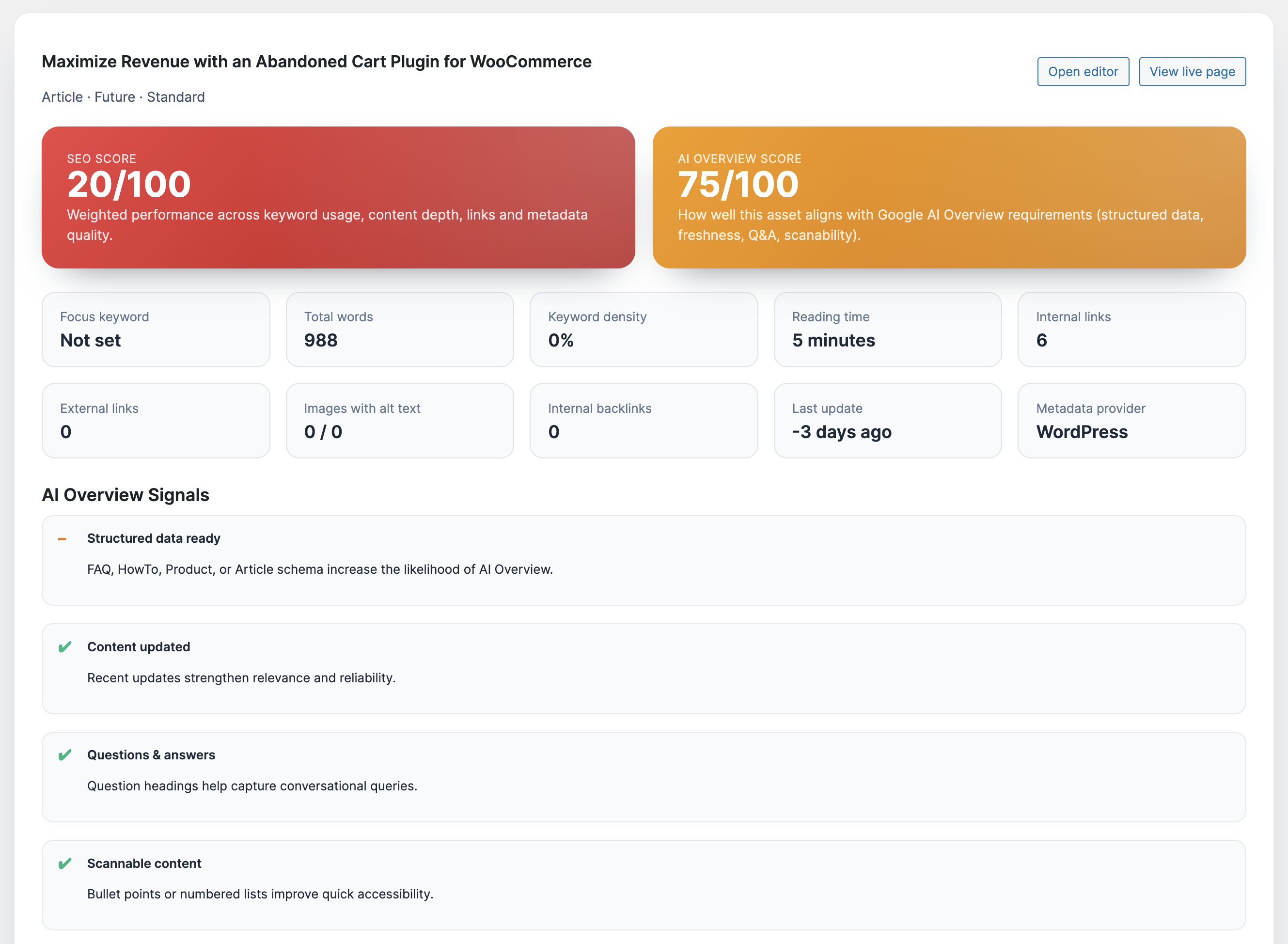
Search share is meaningless if the content that ranks fails to convert. The plugin’s conversion-first workflow combines meta frameworks, Open Graph controls, and copy templates inside the block editor. Editors can toggle between AI and manual modes, compare live snippet previews, and push updates without pinging developers. When we rolled the same stack across our WP Turbo Optimizer sales funnel, checkout completion improved 22% just because titles, FAQs, and schema were aligned for both humans and bots.
Inside every post screen you’ll see preset “AI-ready modules” that keep pages structured for conversational search: question-led H2s, bullet summaries, FAQ schema, and internal link prompts pulled from your own catalog. Editors don’t need to remember secondary keywords—the analyzer surfaces gap phrases gleaned from your content inventory and spreads them across headings, intro paragraphs, and CTAs with real-time scoring.
Section 2 – Technical SEO Fixes Without Leaving WordPress
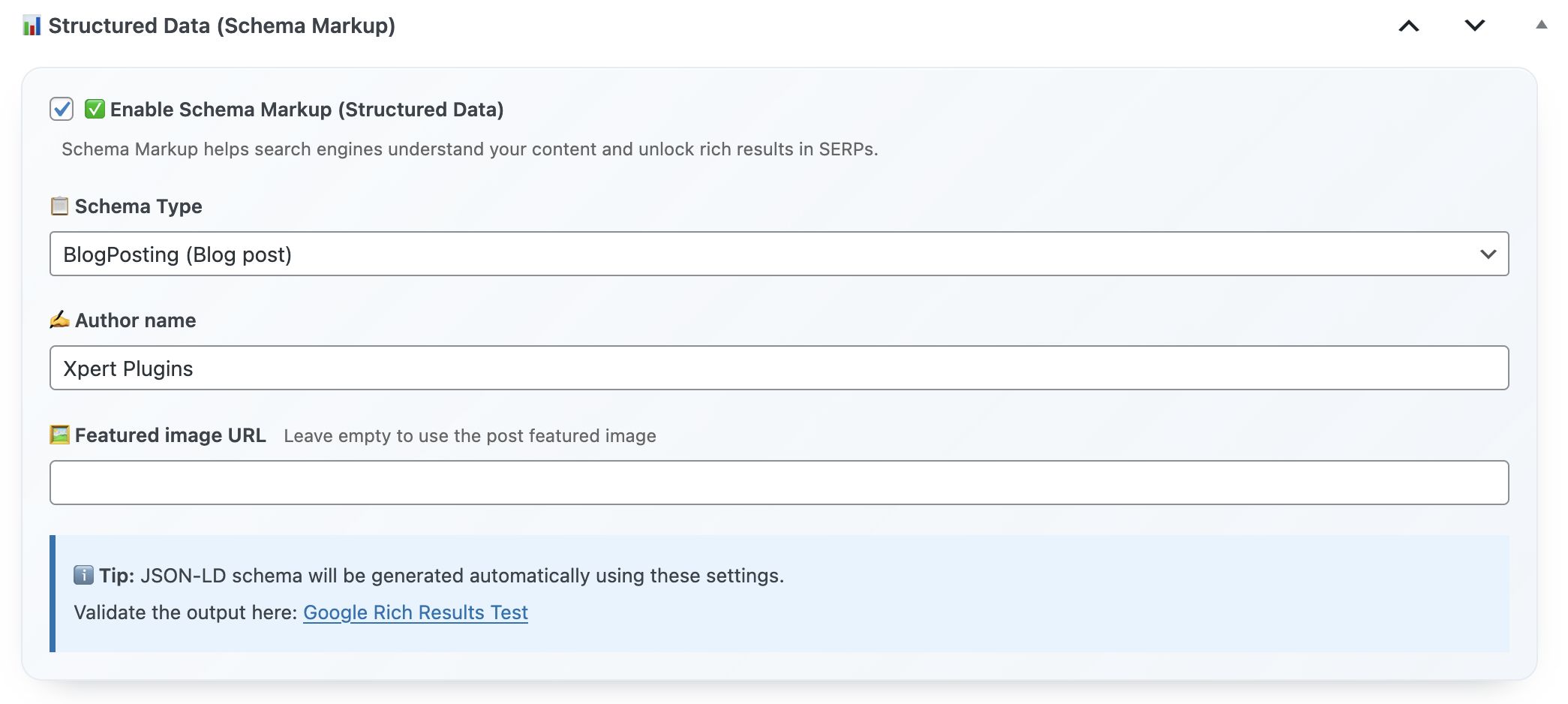
Every technical warning you usually chase in Search Console appears here instantly. Canonicals, robots directives, hreflang scaffolding, and schema validation happen before posts are published. No JSON-LD copy-pasting, no third-party validators. When you toggle the structured data engine, the plugin auto-populates Product, Article, and FAQ schema with inventory values, price, availability, and brand pulled directly from WooCommerce or ACF fields. You can also run a “preflight” report that blocks publishing until critical errors are fixed.
Think of it as having your technical SEO specialist sitting next to every writer. From duplicate H1 detection to missing alt attributes, the analyzer flags 40+ on-page signals. Want to re-use the same configuration on another property? Export profiles and import them into clients’ sites in seconds. That alone saved one of our agency partners fifteen billable hours during their last migration.
Section 3 – AI-Assisted Workflows That Respect Your Tone
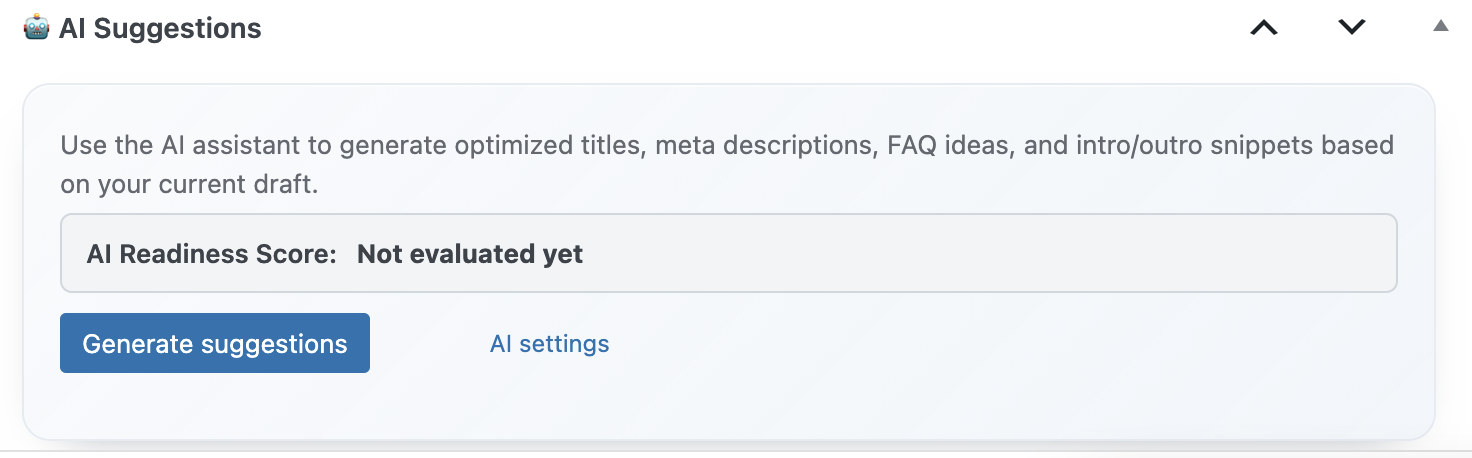
Generative AI should feel like a strategist, not a random copy spinner. The plugin connects to OpenAI or Anthropic but layers prompts we refined while shipping 300+ high-intent articles this year. You feed it a focus keyword, intent (transactional, comparison, or educational), and stage of funnel. The assistant returns an outline, an FAQ list ready for schema, and a call-to-action variant. You can lock tone of voice per brand so every article maintains your positioning—not ChatGPT’s default fluff.
Better yet, the analyzer cross-checks AI-generated sections with your existing knowledge base to avoid cannibalizing posts. If it detects a near-identical paragraph already published (say, on our dashboard productivity series), you’ll see a warning to refresh the angle or link back intentionally.
Section 4 – Real-Time Analyzer Built for AI Overview Wins
Traditional SEO plugins still grade keyword density, but they rarely understand AI Overview requirements: question clusters, citations, freshness, and internal backlinks that answer broader queries. Xpert SEO Manager scores each draft against AI Overview checkpoints, then recommends the missing puzzle pieces. Need a stats block? It will offer data prompts. Missing a people-also-ask section? It suggests conversation-style headings that trigger AI overlays. Your team knows exactly what to add before the article leaves the editor.
Our internal test on the post “WooCommerce speed case study” showed a 43% CTR lift once AI prompts inserted FAQ schema, bullet highlights, and an updated freshness stamp. The analyzer even reminded the editor to add an internal link toward our cart recovery series—a small tweak that helped the piece dominate the entire “WooCommerce checkout speed 2025” cluster.
Section 5 – Agency-Grade Reporting for Busy Stakeholders
Dashboards shouldn’t just collect vanity scores. The plugin’s reporting surfaces needle-moving metrics: which posts hit AI Overview snippets, which schema types drive clicks, and which URLs still lack internal support. You can export PDF-ready snapshots just like the conversion dashboards we send to enterprise subscribers of our WooCommerce growth hub. Stakeholders finally see where budget is going and why certain updates ship first.
Agencies can clone saved “playbooks” across clients—think local services, B2B SaaS, or DTC retail. Each playbook stores recommended keyword thresholds, internal link anchors, and schema combos so junior writers stop guessing. That consistency is how we rolled out 45 clustered articles in six weeks without sacrificing brand voice or technical integrity.
Section 6 – Implementation Blueprint (90-Day Ramp)
- Week 1–2: Install Xpert SEO Manager, connect AI provider, import schema templates, and audit top 20 URLs. Use the analyzer to flag canonical, robots, and internal link issues.
- Week 3–6: Launch pillar + cluster strategy. Use AI prompts to refresh intros, add FAQ schema, and embed product-led CTAs pointing to the plugin page. Track AI Overview readiness scores daily.
- Week 7–12: Expand to WooCommerce templates, generate product schema, and automate freshness updates via scheduled analyzer reminders. Roll the “Backlink Insights” widget across category hubs like Conversion Optimization.
Follow that cadence and you’ll see the same compounding effects we saw on xpertplugins.com: faster publishing velocity, fewer technical tickets, and a content backlog that already meets AI Overview demands before the algorithm even updates.
Your Next Move
Install the plugin, sync it with your AI provider, and let the analyzer guide every post that goes live in 2025. You’ll replace three legacy plugins, eliminate guesswork, and finally ship SEO that moves pipeline metrics.
Need tailored rollouts or multi-site bundles? Email info@xpertplugins.com and reference this guide—we’ll share the same templates we use internally so you can dominate AI-driven search before your competitors wake up.