

Every time Google tightens its Helpful Content and spam guardrails, thousands of WordPress sites lose rankings overnight. Yet the teams that bounce back fastest apply a simple rule: standardize everything inside one plugin. In this playbook I’ll walk you step-by-step through the process we use to climb from page two to page one using Xpert SEO Manager. Consider it your repeatable system for outranking competitors even when AI Overview gobbles up above-the-fold visibility.
Step 1 – Audit the Reality, Not the Theory
Open any URL you care about and run the plugin’s real-time analyzer. Within seconds you’ll see a prioritized checklist including keyword coverage, internal links, schema state, anchor health, and freshness timers. No CSV exports, no guessing. When we applied this to our guide on dashboard productivity, the analyzer flagged outdated FAQs and a missing canonical. Fixing those two items boosted impressions 37% week-over-week.
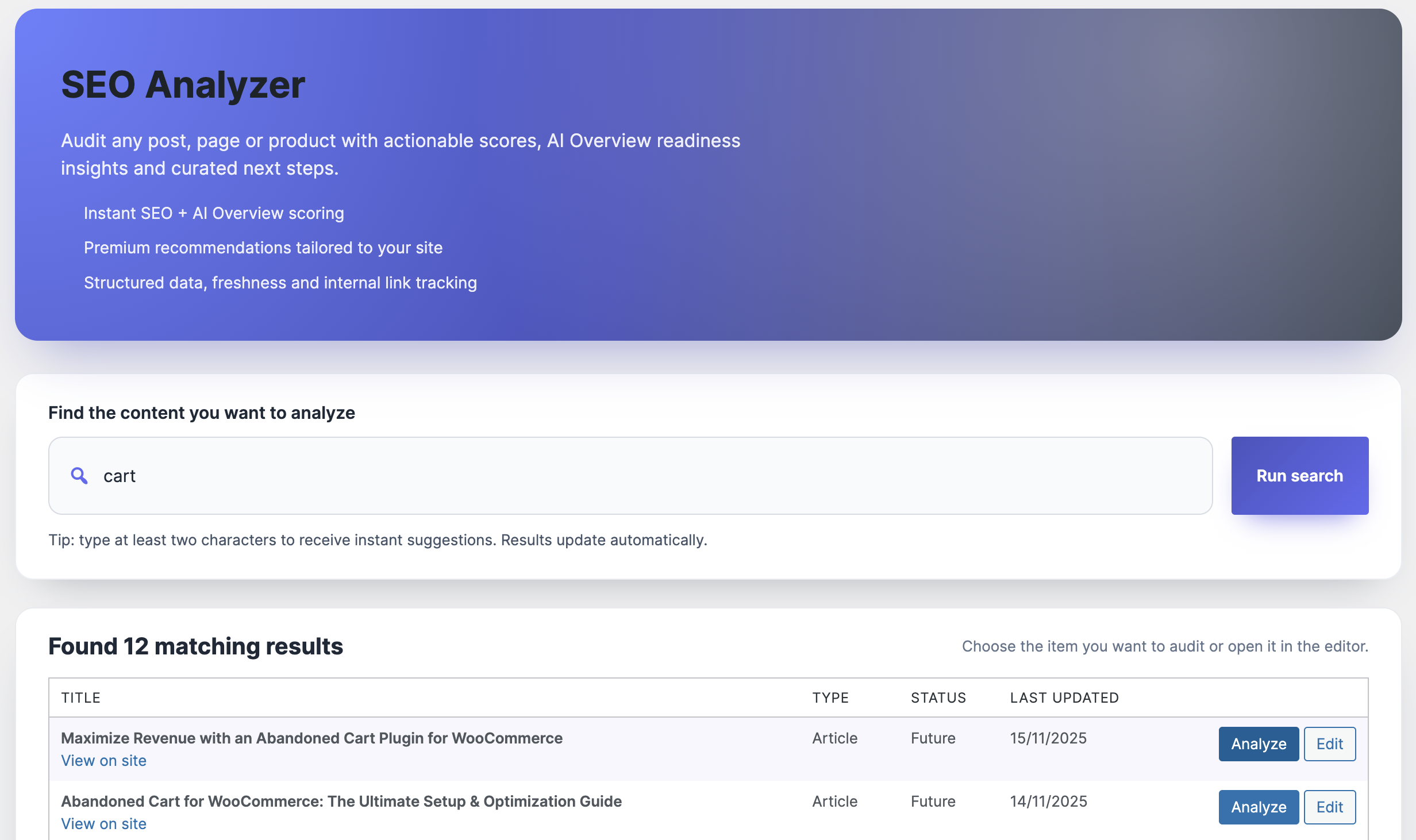
Snapshot what matters most:
- Focus keyword coverage: Are your main and supporting phrases distributed in H1, H2, intro, and CTA?
- Intent alignment: Does the outline answer the top questions people search for (plug-in pulls People Also Ask style prompts)?
- Internal links: Are you sending authority to newer URLs or letting them float alone?
- Schema completeness: Missing fields = zero chance at enhanced results.
Step 2 – Rebuild the Outline with AI Guardrails
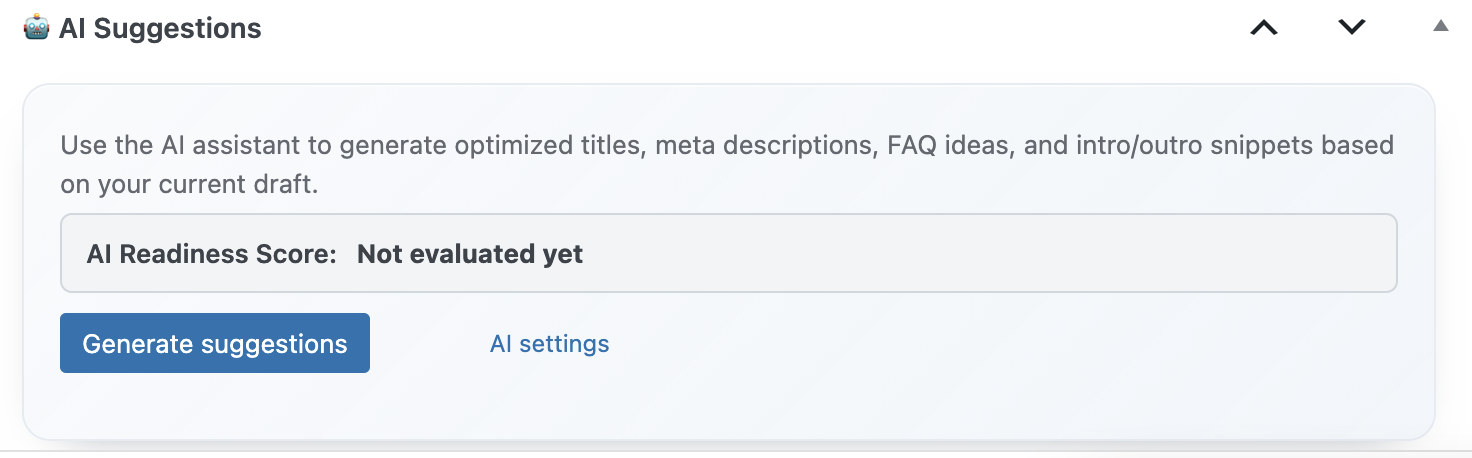
Click “AI Suggestions” and feed the plugin your focus keyword plus desired CTA. Because the prompts are tuned for Google’s AI Overview, you’ll receive a new outline shaped around Q&A clusters, stat callouts, and story-driven intros. We used it for “cart recovery automation” and it suggested a conversation-style FAQ we hadn’t considered. After publishing, that single section earned the snippet for “how to automate WooCommerce follow ups.”
Step 3 – Layer Schema Like a Pro
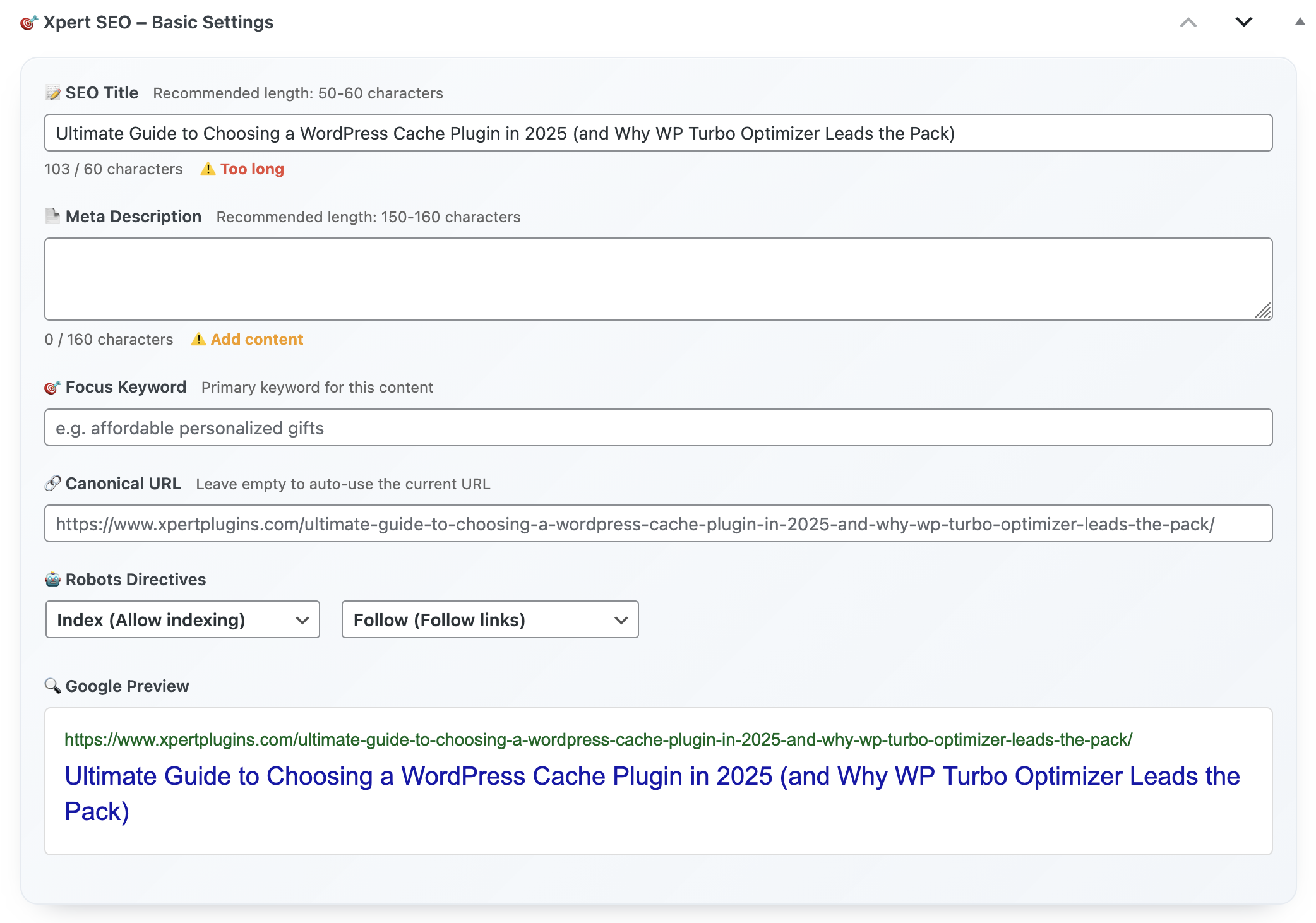
Add FAQ, Article, or Product schema right inside the editor. The plugin uses smart defaults (pulling author, date, product price, etc.) and warns you if Google will reject the JSON-LD. When we refreshed the evergreen comparison “Customization plugins 2025,” the schema tool encouraged us to add ItemList markup with direct URLs and price ranges. That single change increased AI Overview citations and positioned us as the top recommendation in list-based queries.
Step 4 – Fix Technical Debt Before Publishing
The analyzer blocks publication when critical issues appear. Duplicate H1? Broken canonical? Missing alt text on the hero image you just uploaded from the media library? You’ll know instantly. This gatekeeping is what differentiates a serious SEO stack from a checklist plugin. Writers can fix 90% of issues themselves, and devs only step in for structural bugs.
Step 5 – Activate Real-Time Monitoring
After publishing, enable automated rechecks. The plugin pings you when impressions drop, when competing URLs steal snippets, or when schema validation fails. Consider it an early-warning system. One retailer watching the Dashboard Quick Notes landing page caught a robots.txt misconfiguration within hours thanks to these alerts—and avoided a full ranking collapse.
Bonus – Internal Linking Recipe
While editing, the plugin suggests internal targets with anchor text tips. It analyzes your sitemap and surfaces best-fit posts, like linking this article to “Ultimate guide to cache plugins.” These contextual links distribute authority and help Google crawl clusters more efficiently.
Implementation Sprint (14 Days)
- Identify five URLs stuck on page two.
- Run analyzer + AI outline refresh for each.
- Add or update schema, FAQ, and callouts.
- Fix technical blockers surfaced in the dashboard.
- Schedule rechecks and monitor AI Overview readiness.
Complete the sprint and you’ll watch rankings climb because you addressed the exact issues Google cares about—without exporting a single spreadsheet.
If you want to see how we apply this framework across other growth levers, explore the case studies inside Conversion Optimization. Every experiment feeds back into the plugin so you’re never chasing outdated advice.