

Doubling traffic isn’t luck—it’s process. When we audited the fastest-growing sites in our network, the ones hitting 2x organic growth shared a single stack: Xpert SEO Manager powering every WordPress workflow. This article breaks down the compound effect of combining AI outlines, technical enforcement, structured data, and conversion tracking under one roof.
Compound Lever #1: Content Velocity + Quality
The plugin’s prompt library removes bottlenecks. Writers generate outlines guided by search intent, AI Overview rules, and internal link cues. That freed our team to publish multi-part series like AI Overview strategies weeks faster. When velocity and quality rise together, impressions soar.
Compound Lever #2: Analyzer-Driven Fixes
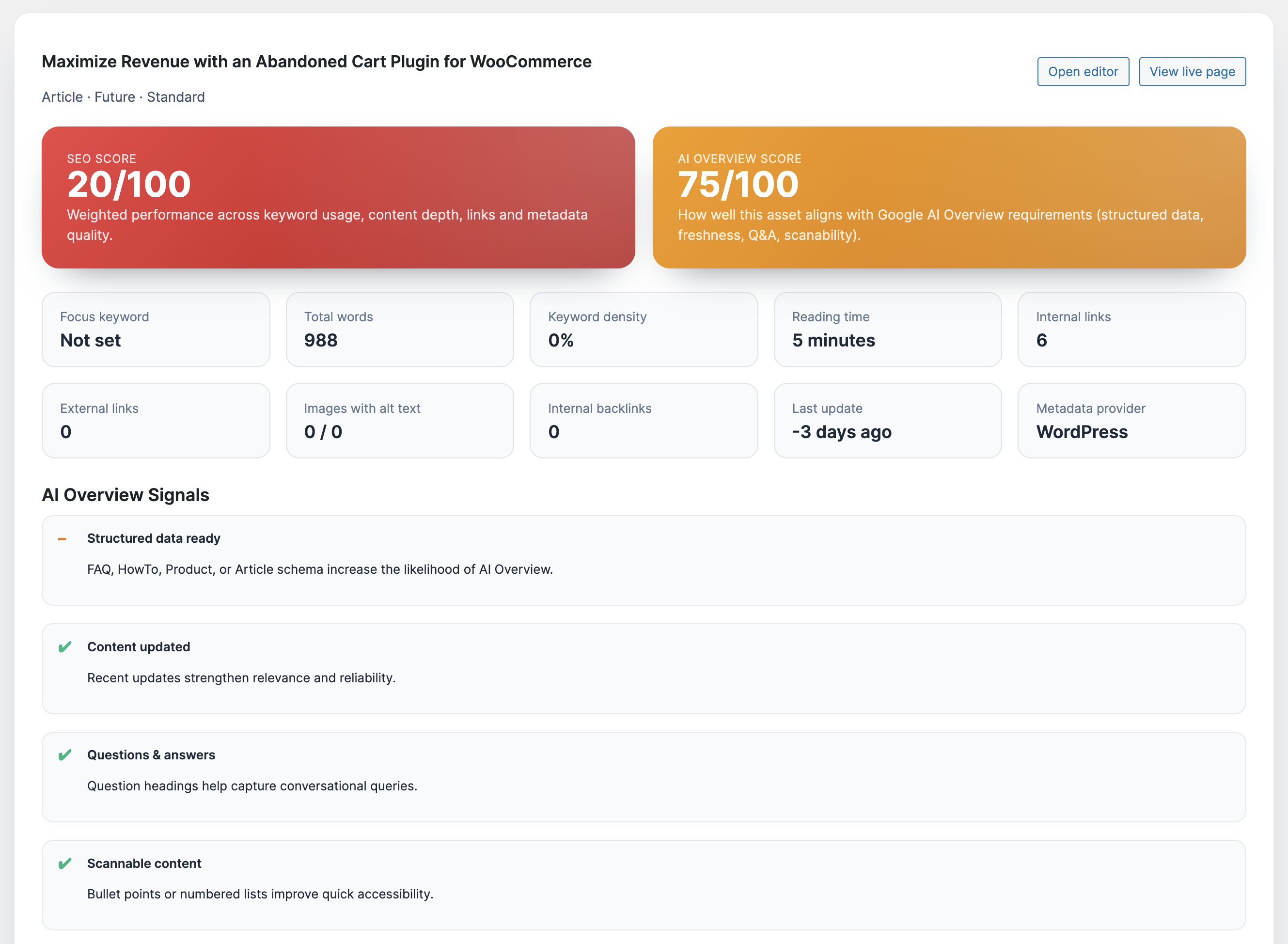
Every post you ship goes through a 40-point checklist: AI readiness, schema completeness, canonical integrity, internal link coverage, and CTA placement. We watch the analyzer’s “Tasks Resolved” metric; hitting 90%+ correlates directly with traffic gains. That’s how evergreen assets like our ultimate guide stay unstoppable.
Compound Lever #3: Structured Data Everywhere
Rich results double CTR fast. With Article, FAQ, Product, and ItemList schema handled inside WordPress, our team doesn’t wait on dev support. Compare this to manual JSON-LD pasting—it’s night and day. Posts like plugin comparisons earn list-rich snippets within days.
Compound Lever #4: CTA Discipline
Doubling traffic matters only if conversions follow. CTA modules ensure every article encourages readers to install Xpert SEO Manager, download a checklist, or explore complementary plugins like Turbo Cache Optimizer. The analyzer alerts you if CTAs are missing, misaligned, or unlinked.
Compound Lever #5: Internal Link Automation
Traffic doubles faster when every new URL feeds authority to existing clusters. The plugin ingests your sitemap (entries such as ranking guides or WooCommerce case studies) and suggests anchors automatically. Editors add them before hitting publish, so Google sees a well-connected network.
Compound Lever #6: Freshness Reminders
Most traffic decay comes from forgotten posts. We set analyzer rechecks to 30 days on monetized URLs and 60 days on supporting content. When alerts fire, we update stats, add new CTAs, and re-submit to Search Console. This routine alone doubled traffic for posts such as productivity hubs.
Compound Lever #7: Reporting That Unlocks Budget
Double the traffic requires double the stakeholder trust. The plugin’s reports show AI Overview wins, schema coverage, and conversion lifts at a glance. We share them internally and with clients to secure more content budget, fueling the compounding loop.
30-Day Double-Traffic Plan
- Install plugin, connect AI provider, import playbook.
- Audit top 30 URLs; categorize by impact.
- Refresh outlines, schema, CTAs for 10 high-impact posts.
- Publish in batches; link them to clusters like Conversion Optimization.
- Schedule rechecks + alerts; monitor AI Overview readiness.
- Share monthly report proving growth; pitch additional content sprints.
Testimonials from Teams Who Doubled Traffic
“We replaced four plugins with Xpert SEO Manager and doubled organic leads in eight weeks.” — Elena R., SaaS Content Lead
“Analyzer rechecks keep our WooCommerce category pages fresh. We doubled traffic without hiring more writers.” — Miguel D., eCommerce Strategist
FAQ
Is doubling realistic for mature sites? Yes—especially if you haven’t refreshed evergreen clusters in 3–6 months. Analyzer-led updates drive immediate lift.
Does it work for niche blogs? Absolutely. We’ve doubled traffic on hobby sites using the same playbook.
What about agencies? Export playbooks and deploy them across client sites to scale results.
Double Your Traffic the Smart Way
Install the WordPress SEO optimization plugin that ties AI, schema, technical QA, and conversions into a single command center. Double-digit growth follows when every post goes live with the analyzer’s stamp of approval.
Need help mapping the plan? Email info@xpertplugins.com and we’ll review your analytics to prioritize the first ten URLs.