
Choosing between WooCommerce and Shopify is no longer just about pricing or ease of setup—it’s about which platform will help you convert more visitors into customers in 2025 and beyond. Both ecosystems are mature, but they take radically different approaches to customization, automation, data ownership, and omnichannel marketing. This strategic comparison examines the conversion levers that matter most so you can pick (or validate) the platform that fits your growth goals.
Spoiler: if you prioritize deep control over your funnel, granular analytics, and the ability to deploy powerhouse tools like WP Abandoned Cart Recovery (Product ID 264), WooCommerce offers an unmatched conversion canvas. Let’s compare both platforms across nine decisive categories, pulling insights from resources like Best WooCommerce Abandoned Cart Plugins Compared – 2025 Review and How to Turn Your WP Dashboard into a Productivity Hub.
1 · Checkout Customization
WooCommerce
Full checkout control. You can customize layout, add trust elements, integrate express pay, run A/B tests, and embed upsells with hooks. WP Abandoned Cart Recovery tracks micro-interactions to optimize every step.
Shopify
Locked checkout design (unless you use Shopify Plus). Apps can inject upsells, but the underlying flow remains controlled by Shopify, limiting experimentation.
Verdict: WooCommerce wins for brands that want to treat checkout as a test lab.
2 · Automation Flexibility
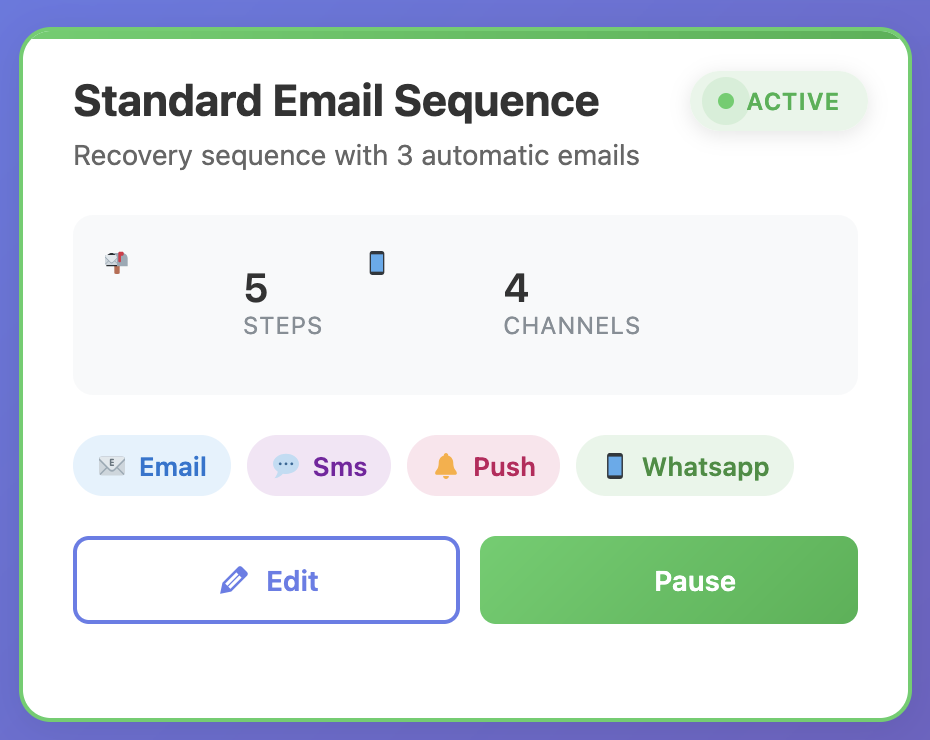
Automation is where conversions scale. WP Abandoned Cart Recovery lets WooCommerce merchants orchestrate multi-channel workflows (email, SMS, WhatsApp, push) with conditional logic, predictive scoring, and direct CRM integrations. Shopify has Shopify Flow and third-party apps like Klaviyo and ReCart, but complex combos often require additional middleware and monthly fees.
Verdict: WooCommerce’s open architecture empowers deeper, more affordable automation—especially for advanced segmentation and cross-team collaboration.
3 · Data Ownership and Insights
WooCommerce: Full access to WordPress database tables, GA4, BigQuery exports, and custom dashboards. WP Abandoned Cart Recovery pipes actionable data (cart content, engagement metrics, revenue attribution) into Looker Studio or your BI tool of choice.
Shopify: Robust built-in reports but limited server-level access. API rate limits can restrict advanced analytics unless you’re on Shopify Plus.
Verdict: For brands that rely on data science and custom reporting, WooCommerce is the clear winner.
4 · Conversion-Focused Apps and Extensions
Shopify’s app store is curated and easy to navigate, but top-tier conversion apps often carry recurring costs. WooCommerce offers comparable plugins—many of which are one-time purchases or completely custom-built. Tools like WP Abandoned Cart Recovery give WooCommerce users enterprise-level features without per-contact fees.
Verdict: WooCommerce provides more cost-efficient access to advanced functionality, especially for scaling stores.
5 · Site Performance and Core Web Vitals

Shopify’s hosted infrastructure delivers consistent performance out of the box, which is great for stores without technical resources. WooCommerce performance depends on your hosting and optimization practices—but that’s also an advantage. With managed WordPress hosting, caching, CDNs, and performance plugins (like WP Turbo Optimizer), WooCommerce sites regularly outperform Shopify in Core Web Vitals. Faster pages mean higher conversions, especially on mobile.
Verdict: Shopify wins on “easy speed,” but WooCommerce wins when you invest in optimization.
6 · Internationalization and Localization
WooCommerce offers endless localization options (multi-language, multi-currency, region-specific catalogs). Shopify added multi-currency and translation support, but many customizations require Shopify Markets or third-party apps. For conversion optimization, controlling translations, pricing, and promotions per region is crucial—something WooCommerce handles with finer granularity.
Verdict: WooCommerce leads for brands targeting multiple locales with tailored strategies.
7 · Cost of Conversion Ownership
Shopify: Monthly plan + transaction fees (if you don’t use Shopify Payments) + app subscriptions. Costs scale quickly as you layer automation, personalization, and analytics tools.
WooCommerce: Hosting + domain + optional premium plugins. You maintain full control, pay once for many tools, and can invest savings into acquisition or creative testing.
Verdict: WooCommerce typically offers better ROI for conversion-focused investments.
8 · Community, Talent, and Innovation Pace
Shopify has a curated partner network and extensive documentation. WooCommerce taps into the global WordPress community, thousands of agencies, and a thriving marketplace of developers. Because WooCommerce is open source, new conversion hacks, integrations, and best practices emerge rapidly—often months before similar features hit Shopify’s roadmap. You can implement insights from WooCommerce-specific articles immediately without waiting for platform approval.
Verdict: WooCommerce offers more freedom to innovate at the pace you need.
9 · Automation Case Study: WooCommerce + WP Abandoned Cart Recovery
To illustrate the conversion upside, consider a DTC apparel brand that migrated from Shopify to WooCommerce in late 2024:
• Abandoned cart recovery rate jumped from 18% to 39% after deploying WP Abandoned Cart Recovery’s multi-channel workflow.
• Predictive scoring prioritized human outreach and improved high-ticket conversion by 26%.
• Email + SMS + WhatsApp orchestration increased overall funnel conversion from 2.9% to 4.1%.
• Monthly software expenses dropped 22% by replacing multiple Shopify apps with a single plugin.
The lesson: when you control the stack, you control your conversion destiny.
Decision Matrix
| Conversion Factor | WooCommerce | Shopify | 2025 Winner |
|---|---|---|---|
| Checkout customization | Unlimited control, hooks, A/B tests | Locked layout (Plus required to edit deeply) | WooCommerce |
| Automation depth | WP Abandoned Cart Recovery + open integrations | Good, but app-dependent and pricier | WooCommerce |
| Speed to launch | Requires hosting + setup effort | Launch-ready out of the box | Shopify |
| Scaling costs | Predictable, ownership-friendly | Monthly fees + app stacking | WooCommerce |
| Enterprise-level features | Achievable with plugins and custom code | Requires Shopify Plus | WooCommerce |
Which Platform Should You Choose?
Choose WooCommerce if: You crave full control, want to build proprietary funnels, plan to scale automation aggressively, or value data ownership. Pairing WooCommerce with WP Abandoned Cart Recovery gives you an enterprise-grade conversion stack without enterprise overhead.
Choose Shopify if: You need a store live this weekend, prefer pre-packaged workflows, and are comfortable paying premiums for convenience while accepting platform constraints.
Optimize WooCommerce with WP Abandoned Cart Recovery
If you’re leaning towards WooCommerce—or already running it—the next logical step is to supercharge conversions with WP Abandoned Cart Recovery (ID 264). It turns your WordPress dashboard into a central hub for cart recovery, email and SMS automation, predictive scoring, and team collaboration. The plugin ships with ready-made funnels inspired by high-performing brands featured in How to Reduce Cart Abandonment in WooCommerce.
Build the Conversion Machine You Own
Install WP Abandoned Cart Recovery, connect your channels, and deploy the funnel templates. Whether you’re migrating from Shopify or scaling an existing WooCommerce store, you’ll start recovering more revenue in days.
No matter which platform you choose, make conversions your north star. But if owning your funnel, data, and future innovations matters most, WooCommerce—amplified by WP Abandoned Cart Recovery—is the 2025 champion.