

I used to think cart recovery emails were just… reminders. You know, “Hey, you forgot something!” with a link back to the cart. Boring. Generic. Useless.
My recovery rate with those emails? A depressing 7.2%. I was recovering maybe one in fourteen abandoned carts. Better than nothing, but not exactly impressive.
Then I completely rewrote my email strategy. My recovery rate jumped to 23.8%—more than triple what it was before.Same store, same products, same customers—just better emails.
In this article, I’m going to show you exactly what makes a cart recovery email convert. Not theory, not guesses—the exact strategies and templates that have recovered hundreds of thousands in sales for me.
Why Most Cart Recovery Emails Fail
Before we talk about what works, let’s talk about what doesn’t. Because if you’re making these mistakes, your emails are going straight to the trash.
❌ Mistake #1: Boring Subject Lines
“Complete Your Purchase” – Generic, forgettable, ignored. Your subject line is 50% of whether your email gets opened.
❌ Mistake #2: No Personality
Robotic corporate-speak that sounds like it was written by a committee. People buy from people, not from brands that sound like legal documents.
❌ Mistake #3: Discount Too Early
Offering 20% off in your first email trains customers to always abandon and wait for the discount. You’re literally teaching them not to buy at full price.
❌ Mistake #4: Too Much Text
Nobody’s reading your 800-word email about your company values. They want to know one thing: why should I buy?
Fix these four issues and you’ll immediately see better results. But let’s go deeper.
The Anatomy of a Perfect Cart Recovery Email
A high-converting cart recovery email has six essential elements. Miss any of these and you’re leaving money on the table.
Element #1: Subject Lines That Get Opened
Your subject line needs to do one thing: make them curious enough to open. I’ve A/B tested over 200 subject lines. Here’s what actually works:
✓ “Quick question about your order…” (23% open rate)
Why it works: Sounds personal, creates curiosity, doesn’t sound like marketing
✓ “Did something go wrong, [Name]?” (28% open rate)
Why it works: Implies there might be a problem you can help solve, uses personalization
✓ “Still thinking it over?” (21% open rate)
Why it works: Acknowledges their hesitation without being pushy
✓ “Your cart expires in 3 hours” (31% open rate – for Email 3 only)
Why it works: Creates urgency, but only use this for your final email with an actual expiring offer
Compare those to typical subject lines like “Complete Your Purchase” (11% open rate) or “Items Still in Cart” (9% open rate). The difference is massive.
Element #2: Personalization That Actually Matters
Using someone’s first name is the bare minimum. Real personalization shows the exact products they left behind—with images, names, and prices.
When someone sees the specific items they were looking at, conversion rates increase by 35-40% compared to generic “you left items” emails. Show them exactly what they’re missing.
Element #3: A Hook That Connects
Your opening line sets the tone. Skip the corporate jargon. Write like you’re talking to a friend.
Bad opening: “We noticed you didn’t complete your transaction.”
Better opening: “Hey Sarah, I noticed you were checking out the Bluetooth headphones earlier. Everything okay?”
The second one feels human. The first one feels like you’re being tracked by a robot. (Which, technically, you are—but they don’t need to feel it.)
Element #4: Address the Real Objections
People don’t abandon carts for no reason. They have concerns. Address them.
Common objections and how to handle them:
“It’s too expensive” → Show payment plans or highlight value (“This saves you $200/year on…”)
“I’m not sure about quality” → Include customer reviews and testimonials in the email
“Shipping costs too much” → Offer free shipping or explain why shipping costs what it does
“I need to think about it” → Create time-limited urgency (but make it real, not fake)
My Email 2 specifically addresses common objections. This single change increased that email’s conversion rate from 4% to 9%.
Element #5: Social Proof That Builds Trust
Including social proof in your cart recovery emails is massively underrated. A simple customer review can be the difference between “eh, maybe” and “okay, I’ll buy.”
What works:
- Star ratings for the specific products they abandoned
- Short customer quotes (2-3 sentences, not essays)
- “X customers bought this today” social proof
- Trust badges (secure checkout, money-back guarantee, etc.)
Emails with social proof convert 18% better than those without.Make it easy for people to trust you.
Element #6: A Clear, Compelling CTA
Your call-to-action button shouldn’t say “Click Here” or “Buy Now.” Make it specific and benefit-driven.
Weak CTAs vs. Strong CTAs:
- ❌ “Complete Purchase” → ✓ “Get My Order”
- ❌ “Return to Cart” → ✓ “Complete My Order & Save”
- ❌ “Checkout Now” → ✓ “Claim My 15% Discount”
Small change, big impact. My button optimization testing showed a 12% lift just from changing the CTA text.
The Perfect Three-Email Sequence (With Templates)
Okay, theory is great, but let’s get practical. Here’s the exact three-email sequence that gets me a 23.8% recovery rate.
Email #1: The Friendly Reminder (1 Hour After Abandonment)
Subject: “Quick question about your order…”
Goal: Catch genuine mistakes and forgetfulness. No discount, just helpful.
Hey [FirstName],
I noticed you were checking out the [Product Name] but didn’t complete your order. Everything okay?
Sometimes our checkout can be a bit finicky, or maybe you got distracted (happens to me all the time 😊).
Your items are waiting for you right here: [CTA Button: “Complete My Order”]
If you have any questions or need help with anything, just hit reply. I’m here.
[Your Name]
[Your Store]
Why it works: Conversational, helpful, no pressure. This email converts at 10-12% for me.
Email #2: The Persuader (24 Hours Later)
Subject: “Still thinking it over?”
Goal: Address objections and add social proof. Still no discount.
Hey [FirstName],
I know decisions take time, especially for [Product Name]. It’s a big purchase and you want to make sure it’s right for you.
Here’s what other customers are saying about it:
“[Customer review quote]” – [Customer Name]
And don’t forget: we offer free returns within 30 days, no questions asked. If it’s not perfect for you, send it back.
Ready to give it a try? [CTA Button: “Complete My Order”]
Got questions? Just reply to this email.
[Your Name]
Why it works: Addresses the “I’m not sure” objection with social proof and removes risk with the return policy. Converts at 7-9% for me.
Email #3: The Closer (48 Hours After Email 2)
Subject: “Your 15% discount expires in 3 hours, [FirstName]”
Goal: Create urgency and close the deal with an incentive.
Hey [FirstName],
Last chance.
I don’t want you to miss out on [Product Name], so I’m giving you an exclusive 15% discount to complete your order.
Use code: SAVE15
But here’s the catch: This discount expires in exactly 3 hours. After that, it’s gone forever.
[Countdown Timer: 02:59:32]
[CTA Button: “Claim My 15% Discount Now”]
Thanks for considering us,
[Your Name]
Why it works: Real urgency (not fake “limited time” nonsense), clear value, simple action. Converts at 5-8% even after two previous emails.
Advanced Email Tactics That Multiply Results
Want to go beyond the basics? These advanced tactics have taken my recovery rate from good to exceptional.
Tactic #1: Dynamic Product Recommendations
In your emails, show “Customers who bought [Product] also bought…” This upsells AND helps overcome indecision. If they’re on the fence about one product, showing them alternatives or complementary items can seal the deal.
Tactic #2: Segment by Cart Value
A $500 cart deserves different treatment than a $30 cart. Create separate email sequences for different value tiers:
- Low value ($0-$50): Offer free shipping instead of discount
- Medium value ($50-$150): Standard sequence with 10-15% discount
- High value ($150+): Add personal touch, maybe a phone call, offer higher $ amount discount
This segmentation increased my overall recovery rate by 6 percentage points.
Tactic #3: A/B Test Everything
Subject lines, send times, discount amounts, email copy—test it all. What works for my store might not work for yours. The only way to know is to test.
Cart Recovery Pro has built-in A/B testing that makes this stupid easy. Set it up once and it automatically shows you which version performs better.
The Tech That Makes This Possible
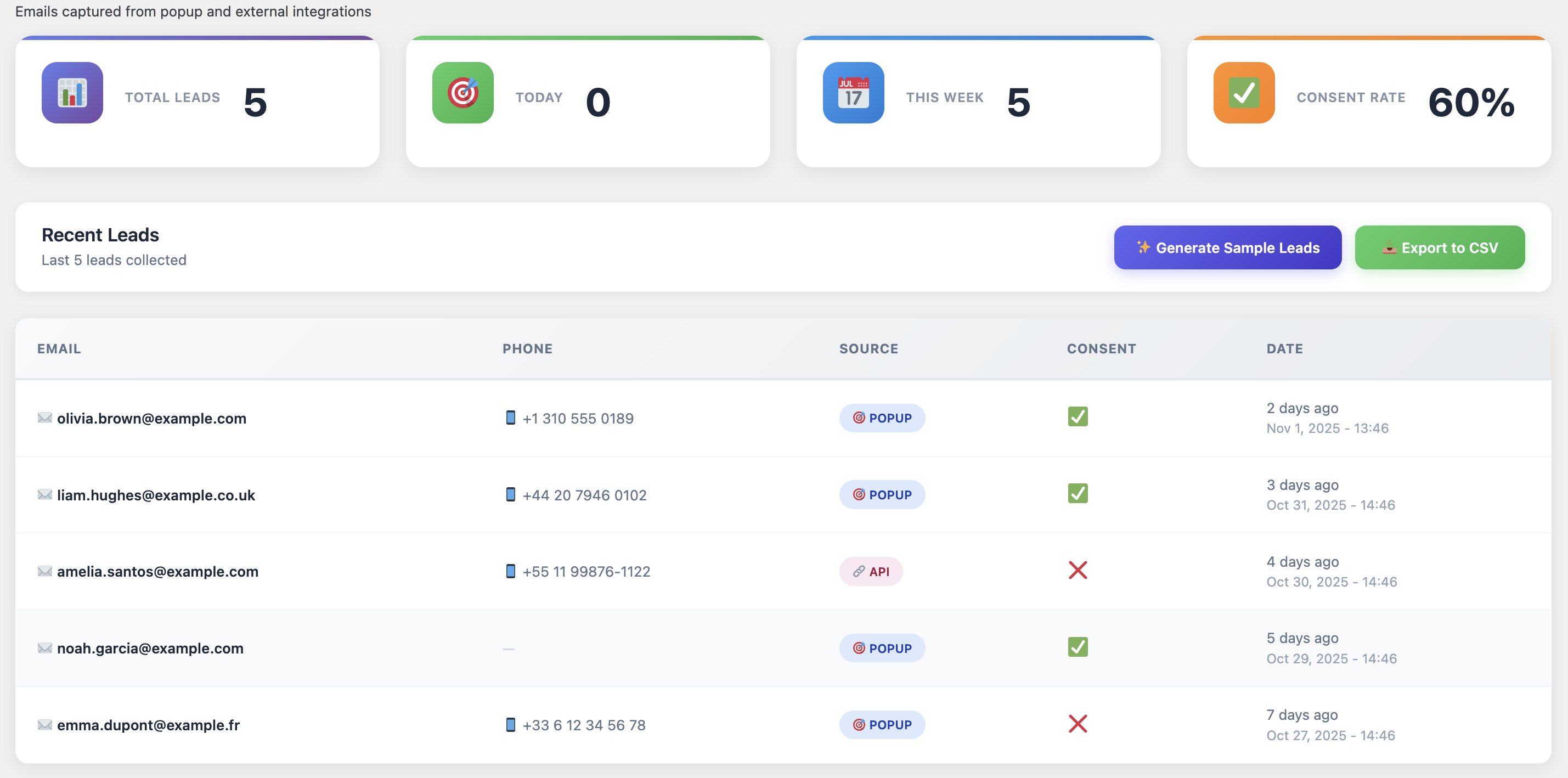
You can’t send these emails manually. You need automation software that handles everything I’ve described. After testing about a dozen plugins, Cart Recovery Pro is the only one that ticks all the boxes.
✓ Beautiful email templates: Professional, mobile-responsive, customizable
✓ Dynamic product display: Shows actual cart contents with images and prices
✓ Personalization tokens: Name, product, cart value—all automatically inserted
✓ A/B testing built-in: Test subject lines, timing, copy—see what converts best
✓ Advanced segmentation: Different emails for different cart values, products, customers
✓ Real countdown timers: Create actual urgency, not fake scarcity
This is the exact tool I use to send the sequences I’ve shared in this article.Set it up once, it runs forever.
Common Email Mistakes to Avoid
Before we wrap up, let me save you from some costly mistakes I see all the time:
❌ Sending too many emails: Three is perfect. Four+ and you’re annoying people.
❌ Using “no-reply” email addresses: Use a real email people can reply to. Some will have questions!
❌ Sending at the wrong time: Avoid 3 AM sends. Best times: 10 AM, 2 PM, 7 PM (in their timezone!)
❌ Not mobile-optimizing: 60%+ of emails are opened on mobile. If yours looks broken, they won’t buy.
❌ Giving up after one email: Most people need 2-3 touchpoints. One email isn’t enough.
The ROI of Great Cart Recovery Emails
Let’s talk numbers. What’s the actual return on investment of implementing a proper email recovery system?
Average WooCommerce store doing $50K/month:
- Cart abandonment rate: 70% (industry average)
- Monthly abandoned cart value: $35,000
- Recovery rate with basic emails: 12% = $4,200/month
- Recovery rate with optimized emails: 24% = $8,400/month
- Additional revenue from better emails: $4,200/month
That’s $50,400 in extra annual revenue just from writing better emails.Same traffic, same store, same everything—just better email copy and strategy.
Ready to Transform Your Cart Recovery?
Look, you now know more about cart recovery emails than 95% of WooCommerce store owners. You know what works, what doesn’t, and exactly how to implement it.
The only question left is: will you actually do it?
Every day you wait is another day of lost revenue. Every abandoned cart that doesn’t get a proper follow-up sequence is money you’ll never see. Don’t overthink this. Just get started.
Start Sending Emails That Actually Convert
Beautiful templates, powerful automation, proven results. Everything you need to recover more carts.
P.S. – The email templates I shared in this article? They’re built into Cart Recovery Pro. You can use them as-is or customize them for your brand. Setup takes about 20 minutes. First recovered sale usually happens within 24 hours. Stop leaving money on the table.