

Here’s a scenario I bet you’ve experienced: Someone logs into your WordPress site and sees information they shouldn’t see. Or worse, they *don’t* see critical information they *should* see. Whether it’s team members, clients, or contributors, showing everyone everything creates chaos—and showing everyone nothing creates confusion.
The solution? Role-based note visibility.Show content writers the editorial guidelines. Show administrators the security alerts. Show shop managers the inventory notes.Give everyone exactly what they need, nothing more, nothing less.
Today I’m going to show you exactly how to integrate dashboard notes with WordPress user roles to create a communication system that’s simultaneously powerful for you and perfectly tailored for every user on your site.
Understanding WordPress User Roles
Before we dive into integration, let’s quickly review WordPress’s default user roles. Understanding these is crucial for effective note targeting.
WordPress Default Roles:
Administrator: Full control of the site (you!)
Editor: Manages all content (theirs and others’)
Author: Creates and publishes their own content
Contributor: Writes content but can’t publish
Subscriber: Basic access, mainly for memberships
Plus, plugins add custom roles: Shop Manager (WooCommerce), SEO Manager (Yoast), and countless others. Each role has different needs and should see different information.

Why Role Integration Matters
Let me paint two scenarios:
Scenario A – No Role Targeting: Everyone sees every note. Administrators see content deadlines they don’t care about. Authors see technical server notes they can’t act on. Result: Information overload and ignored notes.
Scenario B – Role-Based Notes: Each user sees notes relevant to their responsibilities. Administrators see critical alerts. Authors see editorial guidelines. Shop managers see inventory updates.Result: Everyone stays informed without overwhelm.
Which scenario do you want? Yeah, me too.
Setting Up Role-Based Notes
With Dashboard Quick Notes, creating role-based notes is incredibly straightforward. Here’s my proven system:
Step 1: Map Roles to Information Needs
Before creating any notes, identify what each role actually needs to know. I use this framework:
🎯 Role Information Mapping:
Administrators need: Security alerts, technical issues, site health, update reminders
Editors need: Editorial calendar, content guidelines, publishing deadlines, quality standards
Authors need: Their assignments, style guides, submission guidelines, feedback
Contributors need: How to submit, approval process, topic suggestions
Shop Managers need: Inventory status, order issues, shipping updates, product changes
This mapping becomes your blueprint for creating targeted notes.
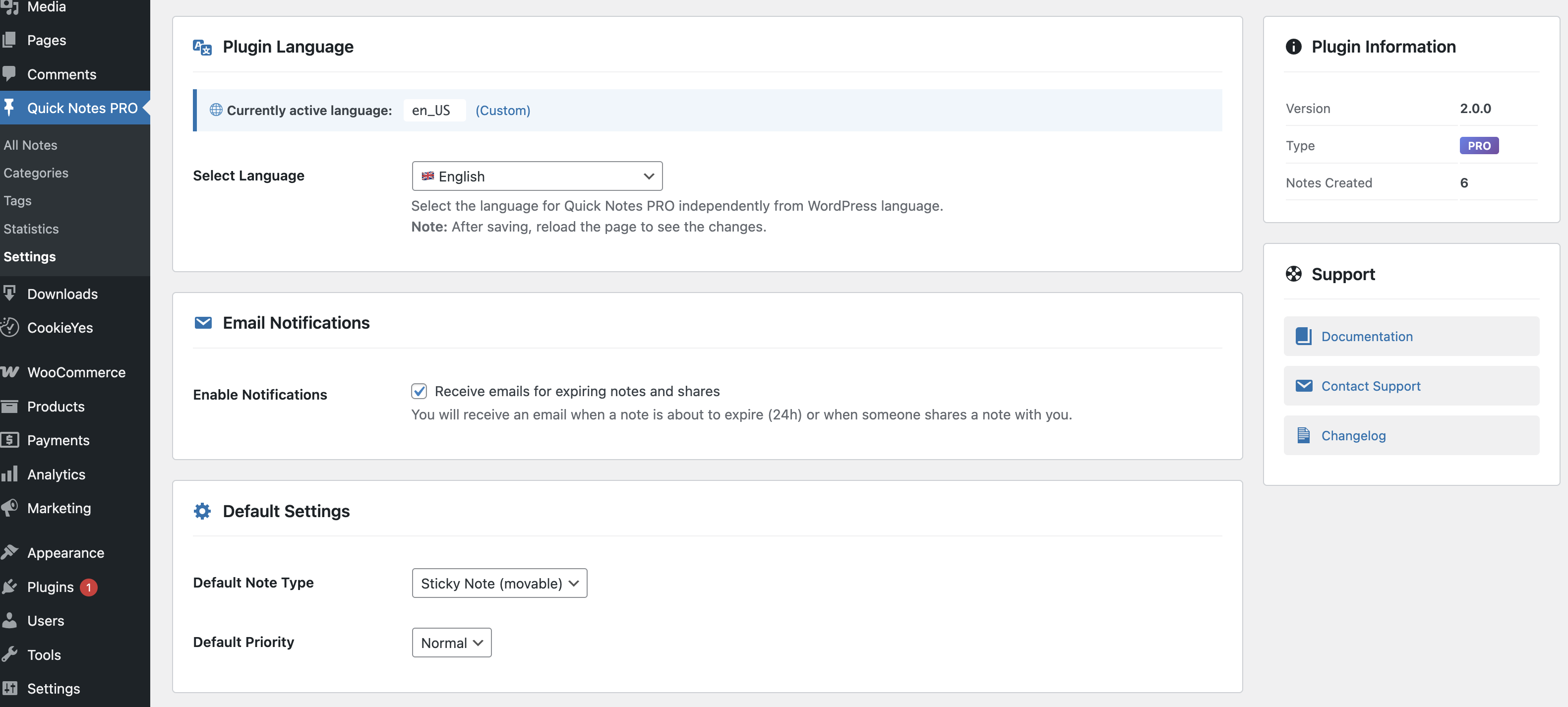
Step 2: Create Role-Specific Welcome Notes
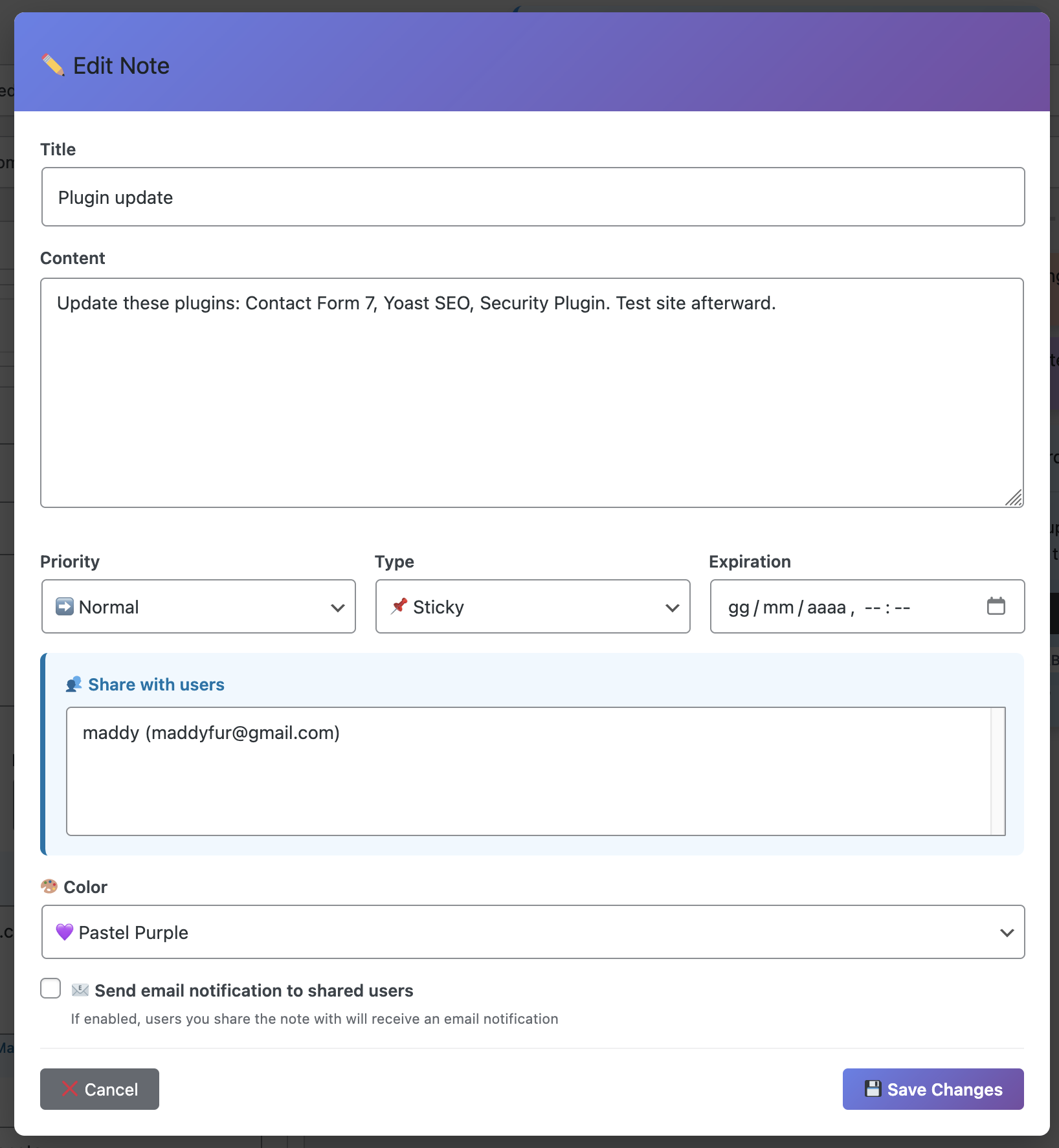
The first note each user should see is a personalized welcome explaining what they’ll find in the dashboard. For example:
👋 Welcome, Author!
You’ll see notes here about:
• Your current article assignments
• Editorial guidelines and style notes
• Feedback on your submitted work
• Important announcements
Questions? Contact editor@example.com
This sets expectations and makes users comfortable with the note system immediately.
Common Role-Based Note Scenarios
Let me show you real-world examples of how I use role-based notes on our sites:
For Administrators: Critical Alerts
Admins need to see urgent issues that no one else should worry about:
🚨 ADMIN ONLY: Security Update Required
WooCommerce 9.3.2 includes critical security patch
Action: Update today before 5 PM
Backup: Completed at 9 AM ✓
Do NOT share this information with non-admin users
Visible to: Administrators only
Color: Red (urgent)
Why it works:Admins see critical issues without alarming other users.
For Editors: Content Coordination
Editors need high-level oversight of content production:
📅 This Week’s Content Pipeline
Due Monday: “WordPress Security” – @Mike (90% complete)
Due Wednesday: “Speed Optimization” – @Lisa (needs review)
Due Friday: “Plugin Guide” – @Tom (just started)
⚠️ Risk: Tom’s article might need extension
Visible to: Administrators + Editors
Color: Yellow (active work)
Why it works:Editors see full pipeline without bothering individual authors.
For Authors: Specific Assignments
Authors need clear, actionable assignments:
✍️ Your Assignment: @Mike
Article: “Top 10 WordPress Security Plugins”
Deadline: Oct 21, 2025
Word Count: 1500-1800 words
Keywords: wordpress security, security plugins, protect wordpress
Must Include: Personal testing results, pros/cons for each
Need help? Message Sarah (Editor)
Visible to: Administrators + Editors + Mike (specific author)
Color: Blue (information)
Why it works:Mike sees exactly what he needs to do, nothing more.

For Shop Managers: Inventory Alerts
If you run WooCommerce, shop managers need operations info:
📦 Inventory Status Update
⚠️ Low Stock: Blue Widget (5 remaining) – reorder needed
✅ Restocked: Red Gadget (50 units received today)
🚚 Delayed: Green Thingamajig (supplier issue, 2 weeks)
Last updated: Oct 16, 9:00 AM
Visible to: Administrators + Shop Managers
Color: Purple (planning)
Why it works:Shop info stays with shop people, doesn’t clutter other users’ dashboards.
Multi-Role Notes: When Multiple Roles Need the Same Info
Sometimes a note needs to be visible to multiple roles. Dashboard Quick Notes makes this effortless—just select all relevant roles:
📢 Team Announcement: October Content Theme
This month’s focus: WordPress Productivity
All content should tie back to helping users work more efficiently in WordPress.
Brainstorm ideas: Dashboard tools, time-saving plugins, workflow optimization
Visible to: Administrators + Editors + Authors
Why it works:Everyone involved in content creation sees the theme, but contributors and subscribers don’t.
Creating a Role-Based Guidelines Note
One of my most effective notes is a permanent “Guidelines” note that each role sees customized to their needs:
For Authors (visible to Authors + above):
📚 Author Guidelines
Writing Style: Conversational, helpful, avoid jargon
Article Length: 1500-2000 words typically
Images: 1 featured + 3-5 in-content images
SEO: Include focus keyword naturally, no keyword stuffing
Links: 2-3 internal links, 1-2 external authoritative sources
Full style guide: [link to documentation]
This stays pinned permanently, giving authors instant access to standards without digging through documentation.
Onboarding New Users With Role Notes
When someone new joins your site, role-based notes make onboarding effortless. Instead of emailing instructions or hoping they read documentation, their dashboard greets them with everything they need:
- Welcome note explaining the note system
- Guidelines note with role-specific standards
- First assignment note (if applicable)
- Resources note with helpful links
They log in, they see what they need, they start working.No friction, no confusion.
Advanced: User-Specific Notes
Sometimes you need a note for one specific person, not a whole role. Dashboard Quick Notes supports this too:
💬 Feedback for Lisa
Your “Speed Optimization” article was excellent! A few notes:
✓ Great practical examples
✓ Clear explanations
⚠️ Consider adding a “Common Mistakes” section
⚠️ One broken image link (line 47)
Overall: 9/10 – Approved for publishing after minor fixes
Visible to: Lisa only (+ Admins)
Why it works:Personal feedback stays personal, encouraging open communication.
Best Practices for Role-Based Notes
After two years of using role-based notes, here’s what works best:
✓ Default to broader visibility: When in doubt, show to more roles rather than fewer. Information silos hurt collaboration.
✓ Clearly label who should see what: Add “[ADMINS ONLY]” or “[EDITORS & AUTHORS]” in note titles for clarity.
✓ Respect privacy: Personal feedback and sensitive info should be user-specific, never shown to peers.
✓ Review permissions quarterly: As roles evolve, visibility needs change. Audit every few months.
❌ Don’t over-restrict: Making too many “admin only” notes defeats the purpose of team communication.
❌ Don’t forget custom roles: If you’ve added roles via plugins, make sure they’re included in your note strategy.
The Team Productivity Impact
Here’s what changed for our team after implementing role-based notes:
- 50% reduction in “I didn’t know about that” situations
- Fewer meetings because information is always available
- Faster onboarding for new team members
- Less email clutter (info goes where people already work)
- Better focus because people only see what matters to them
That’s not just productivity—that’s peace of mind for everyone.
Start Communicating Smarter Today
Look, you could keep emailing everyone about everything. You could keep assuming people check shared documents. Or you could put information exactly where it needs to be, visible to exactly who needs to see it.
With Dashboard Quick Notes, role-based communication is effortless. Right information, right people, right place. That’s the formula for team productivity.
Stop broadcasting to everyone and start targeting effectively. Your team will thank you.
Transform Your Team Communication
Give every user exactly the information they need with role-based notes.
P.S. – The best communication systems are invisible—people just get the information they need without thinking about it. Role-based notes create that invisible efficiency. Try it for a week and see how much clearer everything becomes!